Unprecedented rainfall continues to cause flooding and ponding leading to problems for corn establishment on 5 to 10% of planted acres in southern Wisconsin. Flooded and ponded areas have existed long enough now so that plants have been killed and areas need to be replanted.
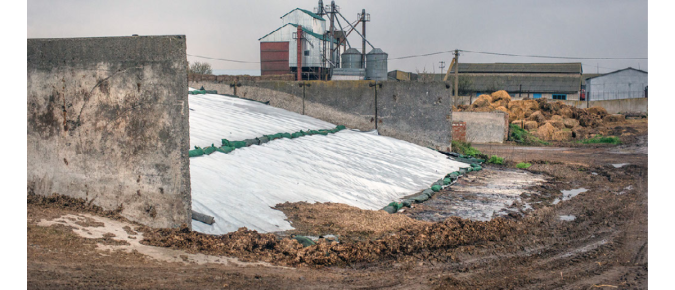
Much expense and time go into harvesting and storing good quality forage. You wouldn’t think of throwing away one third of this forage. However, this is what can happen without proper storage and feedout management. This fact sheet discusses storage feedout management strategies to help save valuable forage.
Shorter rotations mean greater profit per acre for the entire farm because of higher alfalfa yield, higher forage quality, reduced pesticide use, greater nitrogen credits, and increased corn yields. Alfalfa is a major profit center on most dairy farms.
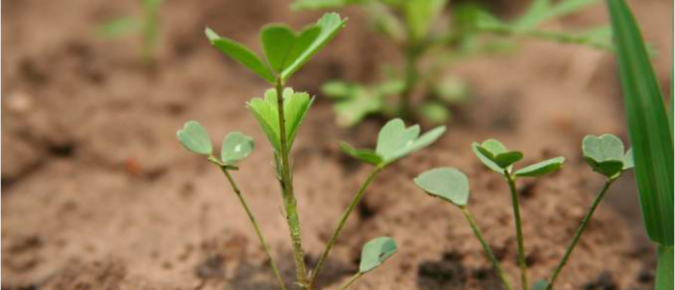
Virtually everyone who has applied their trade as an alfalfa researcher has done a seeding rate study at some point in their career. The scientific literature is full of such studies and most come to the same conclusion: very little of what we dump in the drill ends up as a productive alfalfa plant that lives to see the next presidential election. It’s not anyone’s fault, but rather that inefficiency is a part of the deal. However, there should be some consideration given to cutting losses simply because input costs, including seed, are not getting any cheaper.
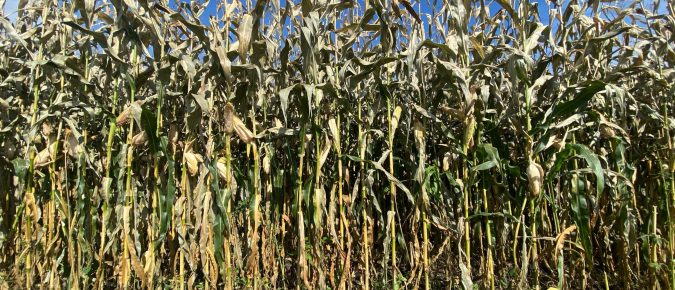
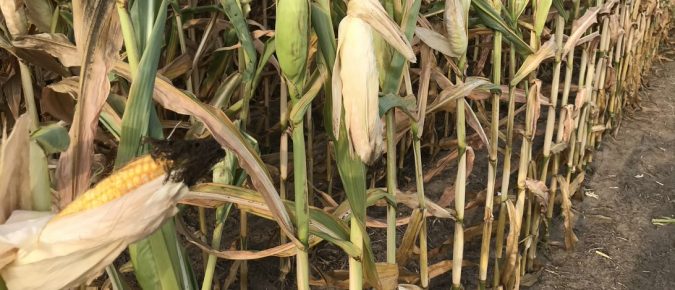
Farmers trying to decide about using drought affected corn fields must first determine success of pollination. If pollination will affect grain yield, then growers must follow directions given by hail adjusters to ensure insurance payment. If the decision is made to harvest the field for silage, then it must be cut at the proper moisture; the crop is usually wetter than it appears.
Weekly Scouting – 20 sweeps at 5 locations in each alfalfa field. Because leafhopper population densities vary from year to year and from field to field, the only way to accurately determine damage potential is by monitoring fields on a weekly schedule.
Beginning in 2007, Wisconsin has a new lime recommendation program. Will this increase or decrease the lime rates that are being recommended? Neither. In some cases the recommendations may be a bit lower and in some cases higher, but the new system will more accurately assess the level of acidity in the soil and lead […]
The grazing movement is, both literally and figuratively, a grass-roots movement. Many livestock producers in the northern USA have recently moved from predominantly confinement feeding systems to grazing systems. Most of them use some form of management-intensive rotational grazing in which livestock are periodically rotated from one paddock to another, allowing the plants in each […]
Manure has traditionally been targeted for corn acres during the course of a crop rotation. The reason has simply been that corn uses and needs all of the nutrients supplied by manure (especially nitrogen).
Ensiling is an important means to preserve forage quality. Although silage fermentation occurs naturally under anaerobic conditions due to the native bacteria on plants, the speed and efficiency of the fermentation (pH drop) is variable, depending on the numbers and types of lactic acid bacteria on the crop.
An improved understanding of the effects of defoliation on forage yield and quality would improve the ability of agronomists, farmers, and crop insurance adjusters to assess the economic impact of hail damage to corn harvested for forage.
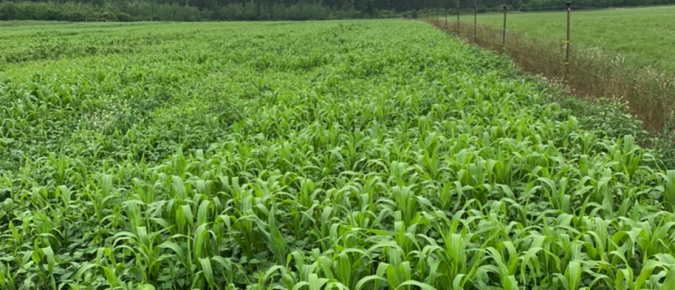
The optimum crop to plant for emergency forage should be determined by 1) when and how it will be utilized, 2) the forage quality needed, and 3) seed availability and cost. In 2003 and 2004, emergency forage trials were conducted at 5 locations across Wisconsin, Michigan and Minnesota. Trials were seeded at each of three […]