Skip to content
UW Crest

Crops and Soils

Division of Extension

  • Topics
    • Economics, Budgets and Financials
    • Emerging Crops
    • Forage Production and Management
    • Fruit and Vegetable Production
    • Grain Production and Management
    • Grazing
    • On-Farm Research
      • Nitrogen Optimization Pilot Program
    • Pest Management
    • Soils, Nutrient Management, and Soil Health
  • Events
    • Events Calendar
    • UW Forage and Cover Crop Field Day
    • Agronomy and Soils Field Day
    • Wisconsin Extension Weed Management Workshop
    • WWASH Conference
    • Badger Crops and Soils Update Meetings
  • News
    • News
    • Get Connected
      • The Wisconsin Crop Manager
    • Hay Market Report
    • Ag Weather Outlook for Wisconsin
  • Programs
    • Webinars
      • Badger Crop Connect
      • Emerging Crops Webinars
      • Focus on Forage
      • Foundational Crop Scouting Training
      • Vegetable Production Webinars
    • Podcasts
  • Articles
  • People
  • About
  • Contact Us
Search
University of Wisconsin-Extension

Articles

Fall Forage Rye for Dairy Heifers and Dry Cows

Fall Forage Rye for Dairy Heifers and Dry Cows

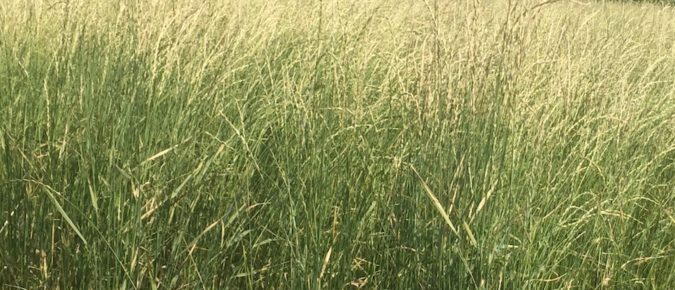
Introduction Many dairy and heifer rearing operations are looking for increased feed production on a limited acreage for their operation. Planting fall grain rye and harvesting the crop as forage the following spring can increase forage yield per acre and reduce forage production costs. Double cropping fall grain rye following soybean or early corn silage […]

White clover for Wisconsin pastures

White clover for Wisconsin pastures

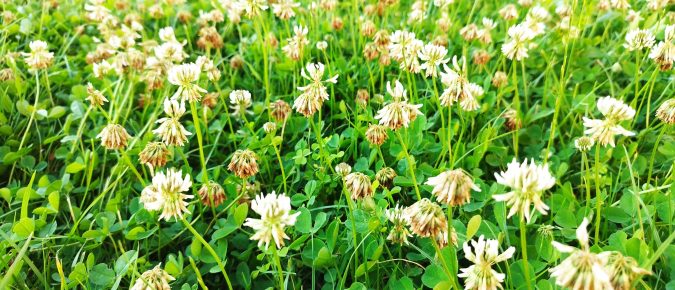
White clover has been described as the “key to the international competitive advantage of New Zealand’s pastoral industries”.  World wide, it is recognized for its high forage quality, ability to support high levels of intake by livestock, and capacity to fix nitrogen. White clover is often thought of as the ideal pasture plant because when […]

NDF Digestibility: Reference Values for Forages, Byproducts and Total Mixed Rations

NDF Digestibility: Reference Values for Forages, Byproducts and Total Mixed Rations

Numerous forage testing laboratories evaluate forages, byproduct feeds and total mixed rations for neutral detergent fiber digestibility (NDFD). Evaluation of forages and other feedstuffs for NDFD is being conducted to aid prediction of feed energy content and animal performance.

Heat Damaged Forages: Effects on Forage Quality

Heat Damaged Forages: Effects on Forage Quality

Traditionally, heat damage in forages has been associated primarily with alterations in forage protein quality as a result of Maillard reactions. A Maillard reaction is a heat-induced chemical reaction between protein (amino acids) and sugars.

The Long and Short of Alfalfa Cutting Height

The Long and Short of Alfalfa Cutting Height

Current recommendations regarding cutting height of alfalfa are designed to maximize yield while maintaining high quality forages and stand longevity. Forage growers frequently cut forages at a height of 3-inches or more. However, recent reports indicate that there may be an advantage to cutting alfalfa closer, leaving an inch or less of stubble height (@griculture […]

The relationship between corn grain yield and forage yield: Effect of moisture, hybrid and environment

The relationship between corn grain yield and forage yield: Effect of moisture, hybrid and environment

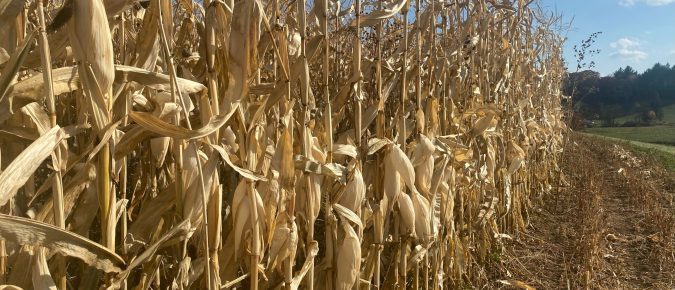
Understanding the relationship between corn grain and forage yield is important to dairymen and grain farmers who often contract with each other for corn silage production.

Heaving in Alfalfa Fields

Heaving in Alfalfa Fields

Heaving is a problem in some alfalfa stands each year in the Midwest. Heaving occurs on heavy soils that have high moisture contents. Repeated freezing and thawing causes soil expansion and contraction that pushes the tap-rooted plants (and fence posts) out of the soil. The need to push against something is why grasses with fibrous […]

Sweet Corn Waste: Forage Quality and Fermentation Characteristics

Sweet Corn Waste: Forage Quality and Fermentation Characteristics

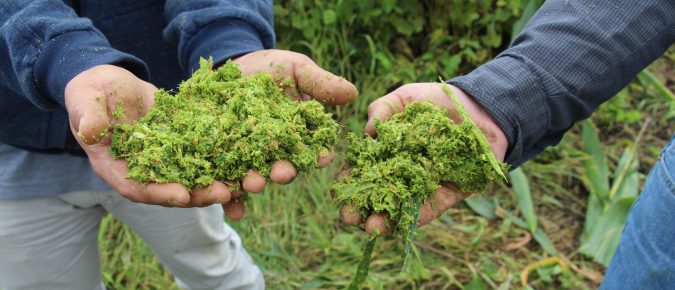
Sweet corn is enjoyed by people across the United States. Some sweet corn is harvested and sold directly to the consumer (i.e. corn on the cob). The rest of the sweet corn is processed, packaged and/or combined with other food products through a processor. Sweet corn production produces byproducts that can be fed to livestock. They include sweet corn stalks (stalklage left on the field after harvest), sweet corn silage (from bypassed acres that were not harvested), and corn canning factory waste (sweet corn waste).


Planting Corn in June and July! – What can you expect?

Planting Corn in June and July! – What can you expect?

Unprecedented rainfall continues to cause flooding and ponding leading to problems for corn establishment on 5 to 10% of planted acres in southern Wisconsin. Flooded and ponded areas have existed long enough now so that plants have been killed and areas need to be replanted.

Feedout losses from forage storage systems

Feedout losses from forage storage systems

Much expense and time go into harvesting and storing good quality forage. You wouldn’t think of throwing away one third of this forage. However, this is what can happen without proper storage and feedout management. This fact sheet discusses storage feedout management strategies to help save valuable forage.

Value of Short Rotations for Alfalfa Profitability

Value of Short Rotations for Alfalfa Profitability

Shorter rotations mean greater profit per acre for the entire farm because of higher alfalfa yield, higher forage quality, reduced pesticide use, greater nitrogen credits, and increased corn yields. Alfalfa is a major profit center on most dairy farms.

Determining the optimum alfalfa seeding rate

Determining the optimum alfalfa seeding rate

Virtually everyone who has applied their trade as an alfalfa researcher has done a seeding rate study at some point in their career. The scientific literature is full of such studies and most come to the same conclusion: very little of what we dump in the drill ends up as a productive alfalfa plant that lives to see the next presidential election. It’s not anyone’s fault, but rather that inefficiency is a part of the deal. However, there should be some consideration given to cutting losses simply because input costs, including seed, are not getting any cheaper.

Posts navigation

Posts pagination

◄ Page 1 … Page 39 Page 40 Page 41 Page 42 Page 43 Page 44 Page 45 Page 46 ►

Division of Extension

Connecting people with the University of Wisconsin

  • Agriculture
  • Community Development
  • Health & Well-Being
  • Families & Finances
  • Natural Resources
  • Positive Youth Development
University of Wisconsin-Madison      |        Explore Extension: Agriculture Community Development Families & Finances Health Natural Resources Youth
Connect With Us
Support Extension
Extension Home

We teach, learn, lead and serve, connecting people with the University of Wisconsin, and engaging with them in transforming lives and communities.

Explore Extension »

County Offices

Connect with your County Extension Office »

Map of Wisconsin counties
Staff Directory

Find an Extension employee in our staff directory »

staff directory
Social Media

Get the latest news and updates on Extension's work around the state

facebook iconFacebook

twitter icon Follow on X


Facebook
Follow on X

Feedback, questions or accessibility issues: info@extension.wisc.edu | © 2026 The Board of Regents of the University of Wisconsin System
Privacy Policy | Non-Discrimination Statement & How to File a Complaint | Disability Accommodation Requests

The University of Wisconsin–Madison Division of Extension provides equal opportunities in employment and programming in compliance with state and federal law.