Grazing management is a constant test of options…’how many animals should I graze in my paddock?’ …’how long should I leave my animals graze?’ (grazing intensity)….’should I start grazing now or should I wait a week or two?’ (grazing time)… ‘should I help the pasture with a hay bale?’ –Sound grazing management is about meeting the requirements of the animal but also those of the forage plant. The grazing requirement in animals is to supply adequate quantity of forage, with matching quality for the animal type –whether a lactating animal with a very high demand for nutrients or a non-lactating one with lower needs. On the other hand, the grazing requirement for the forage plant is to favor conditions that lead to as much plant reserves, leaf area and bud sites necessary for regrowth once the plant has been grazed or defoliated. This management is further put to the test in critical growing conditions; too much moisture may impact the soil through the hoof action of the animals but too little moisture plus warm temperatures will likely increase water loss and the water requirements of the forage plant.
How to achieve sustainable grazing?
There are a couple of tools under the control of the grazer or manager. One is the grazing intensity or the residual stubble height of the pasture. A second one is the frequency of grazing. Both are important but residual height is a main determinant for long-term persistence of your pastures.
How short or close should pastures be grazed?
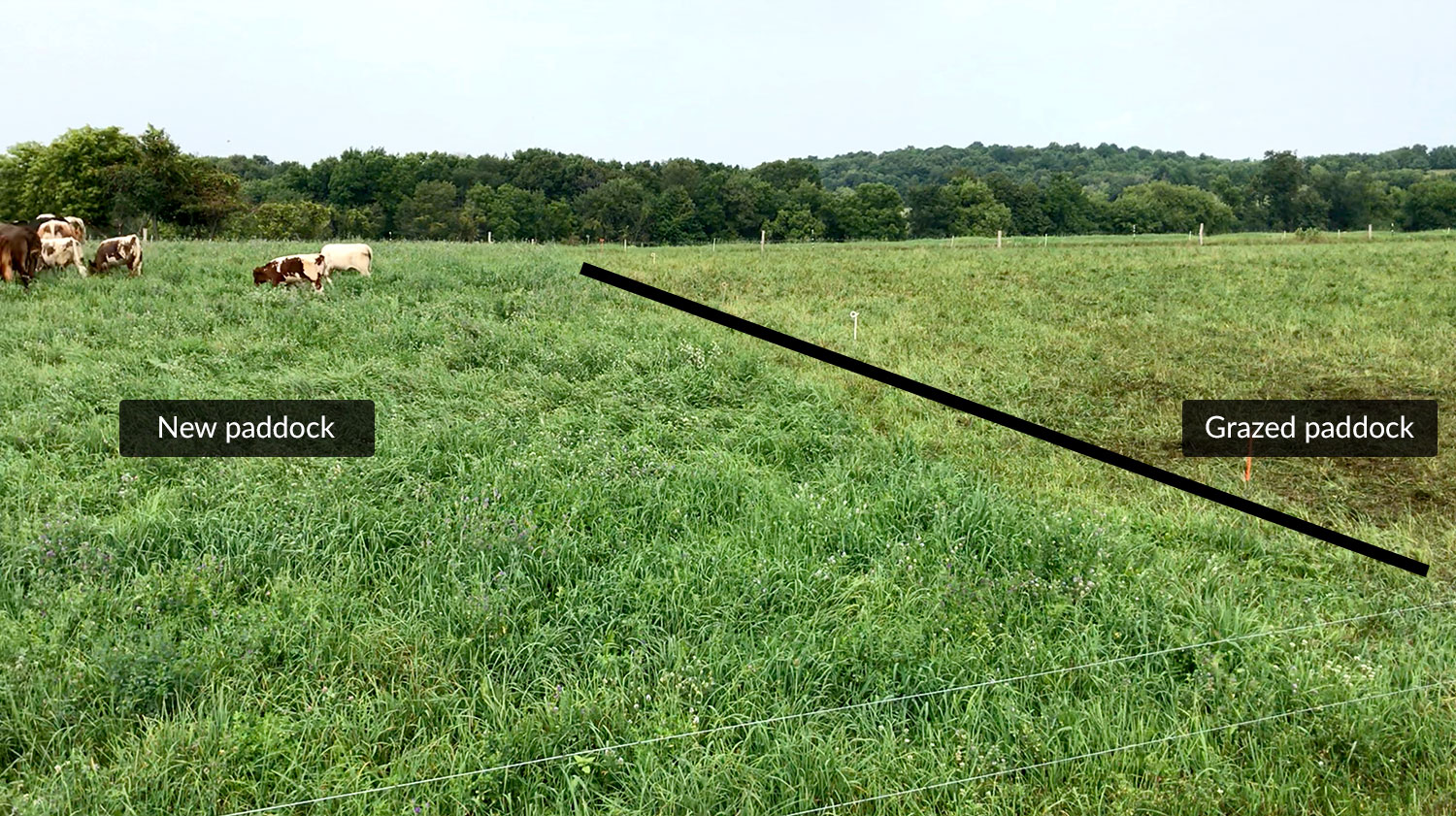
The key to plant persistence is to leave a ‘generous’ grazing stubble height that will allow for quick regrowth of leaves and stems. For example, pastures planted to bunch grasses of medium size like orchardgrass or orchardgrass mixes take longer to recuperate when grazed to a very short stubble of two to three inches. However, when taller stubbles of six to seven inches are left orchardgrass pastures recover quickly.
Residual height not only affects productivity of the grass but also the growth of tillers, which is one mechanism of persistence in temperate perennial grasses. In addition to growth source, tillers are carbohydrates or energy reserves. Some species keep their carbohydrate reserves in structures below ground others keep it in the lower one-third section of the canopy where the thicker tillers are. Forage species with growth habit that is in bunches will be less tolerant of low residual grazing height than those with a sod-type growth. This fact will gain even more relevance under stress situations such as the dry conditions that prevail in some summers.
Recommendations from grazing trials conducted in Wisconsin using temperate grasses like meadow fescue, orchardgrass, and reed canarygrass suggest that these species are best utilized at mid to vegetative stage, and when paddocks were grazed at a taller residual height. Using this management, the animals could be returned for grazing at an earlier time. This research also showed that grazing drought-stressed grass multiple times had the greatest negative effect on annual pasture production.
Doing a more lax grazing by leaving a taller stubble height will result in more leaf area for growth, which will help grow the new leaves more rapidly afterwards. In doing so a more rapid rotational grazing schedule can be feasible.
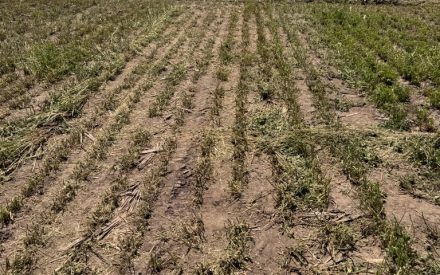
In summary, routinely grazing below 2 inches is generally not an ideal practice. As conditions become stressful a more relaxed grazing is prescribed. Start with your normal rotation-schedule and as dry conditions set, rotate the animals quicker so the animals remove just the tip of the grass blade and leaf defoliation is not demanding on the plant; by quick rotation we are considering permanence in a paddock just half a day or only hours. If dry field conditions are extreme, it will be necessary to temporarily close pastures to grazing. It is cheaper to feed hay for a few weeks than to totally renovate an overgrazed pasture that is beyond help.