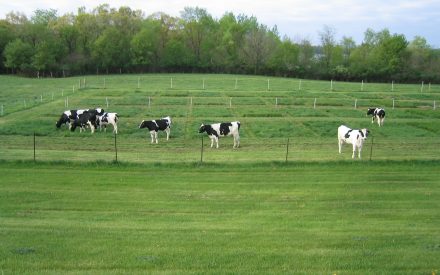
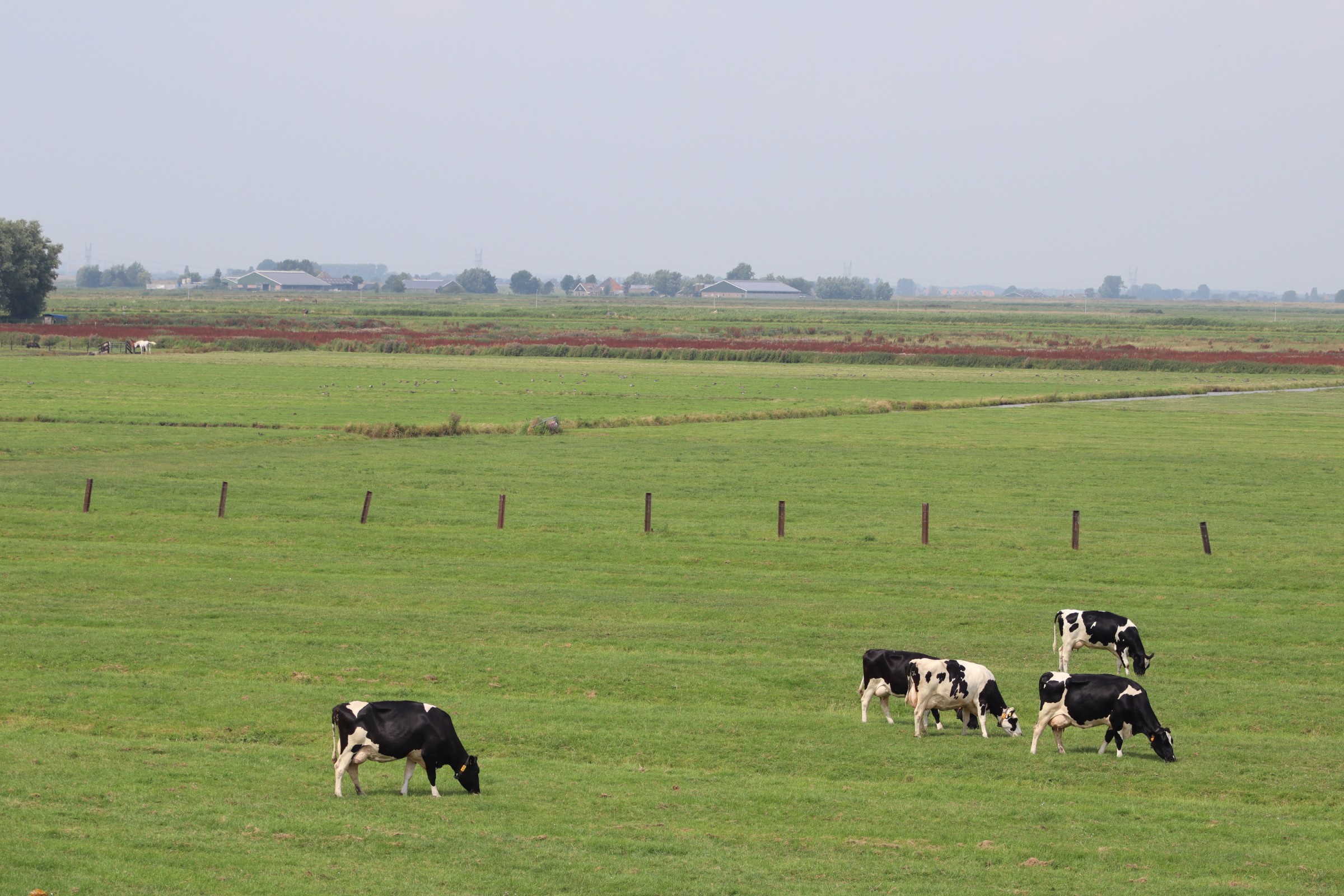
“If you graze it, it will grow.” This variation of the old Field of Dreams adage is often the mantra of grazing influencers. And in many cases, adding livestock to a forage system can induce growth through disturbance and nutrient cycling. But what if the tips and tricks you collect don’t seem to work as advertised? What if conventional wisdom doesn’t seem to apply? To see this on display, you need not look any further than non-irrigated, sandy soils.
Grazing is a practice that works across a wide spectrum of conditions, but it must be understood that slight variations in management are required for certain soils and topographies. This is especially true for managing soil fertility. The next sections will break down three critical components of managing soil fertility in sandy soils.
1. Nitrogen
Sandy soils typically have less than 2% organic matter. Since sand particles are so much larger than the very tiny molecules of organic matter, they don’t bind together well. Without much organic matter, sandy soils don’t hold nitrogen, water, or other nutrients well.
How does this relate to the conventional wisdom of managed grazing? Grazers often suggest leaving sufficient residue after a rotation to build thatch that will eventually decompose into organic matter. The decomposition process requires adequate nitrogen to break down the long chains of carbon present in grasses. Sandy soils that are low in nitrogen due to low organic matter can end up building up so much thatch that regrowth of grass is inhibited, and nutrient cycling is delayed.
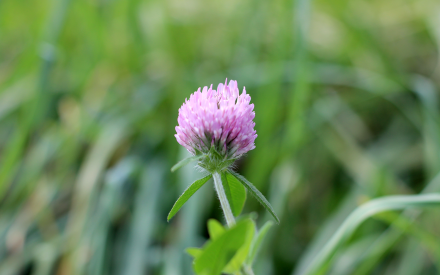
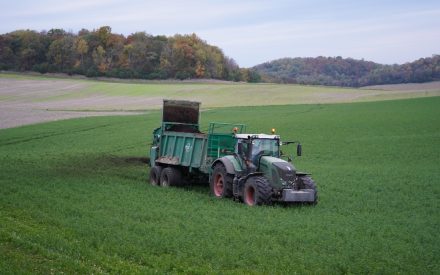
One way to avoid this is to increase grazing intensity so less residue (but not none!) is left and manure is more concentrated, resulting in a lower and more favorable carbon to nitrogen ratio. Other options are to bring in outside sources of manure to add nitrogen to the system and stimulate the breakdown process, planting more legumes like alfalfa or clover to increase nitrogen fixation, or adding nitrogen fertilizer.
2. pH
Soil pH is one of the most important properties of soil. If the soil is too acidic or basic, plants won’t be able to take up proper nutrients and may not grow at all. Acidification is problematic in sandy soils because the minerals that keep pH balanced do not bind well with sand particles are lost as water flows through the soil. Sandy fields commonly consist of a pH under 6, which may prevent many pasture forage species from growing. This is most easily addressed by applying lime. See the UW publication A2458 for more information on calculating lime needs.
3. Sulfur
It is possible to still have pale, lackluster forage even after addressing nitrogen and pH issues in sandy soils. While this is the point when many producers conclude nothing grows in sand, sulfur deficiency may be the real culprit. Sulfur is essential for plants to create proteins, which are a critical component of livestock feed. Sulfur deficiency is often mistaken as nitrogen deficiency. While most parts of the state get enough sulfur from rainfall, manure, and what naturally occurs in soil organic matter, sandy soils are a different story. Low organic matter, combined with constant leaching of sand and forage crops that demand significant amounts of sulfur create perfect conditions for sulfur deficiencies to occur.
This is where soil testing is critical. Sulfate (SO2) assessment can be added to normal soil tests for an additional fee and can validate deficiency symptoms. Readings under 7 ppm SO2 suggest that additions of sulfur are warranted. However, amendment sources must be chosen wisely, because elemental sulfur (S) must be broken down by microbes that are often not abundant in low organic matter conditions. Sulfur can be combined with nitrogen applications by using products such as ammonium sulfate or gypsum, reducing trips across the field.
“If you graze it, it will grow,” sounds nice, but it’s not always the case in sandy soils. Pastures and hay fields in sand require extra attention to avoid carbon overload, nitrogen deficiency, acidification, and sulfur deficiency. For more information, see the links below or talk to your Extension Crops Educator.
References:
Keller, K. & Peters, J. (1998) When and How to Apply Aglime. University of Wisconsin-Extension. Retrieved August 1, 2022, from https://soilsextension.webhosting.cals.wisc.edu/wp-content/uploads/sites/68/2014/02/A2458.pdf
Keller, K. & Schulte, E. (1999). Understanding Plant Nutrients: Soil and Applied Sulfur. University of Wisconsin-Extension. Retrieved July 26, 2022, from http://soilsextension.webhosting.cals.wisc.edu/wp-content/uploads/sites/68/2014/02/A2525.pdf
Magdoff, F., & van Es, H. (2021). Ch 3. Amount of Organic Matter in Soils – SARE. SARE. Retrieved 26 July 2022, from https://www.sare.org/publications/building-soils-for-better-crops/amount-of-organic-matter-in-soils/
USDA NRCS. (2011). Carbon to Nitrogen Ratios in Cropping Systems. USDA Natural Resource Conservation Service. Retrieved July 26, 2022, from https://www.nrcs.usda.gov/Internet/FSE_DOCUMENTS/nrcseprd331820.pdf
Yost, J & Hartemink, A. (2019). Soil Organic Carbon in Sandy Soils: a Review. Advances in Agronomy, Volume 158. Pages 217-230. https://doi.org/10.1016/bs.agron.2019.07.004