Skip to content
UW Crest

Crops and Soils

Division of Extension

  • Topics
    • Economics, Budgets and Financials
    • Emerging Crops
    • Forage Production and Management
    • Fruit and Vegetable Production
    • Grain Production and Management
    • Grazing
    • On-Farm Research
      • Nitrogen Optimization Pilot Program
    • Pest Management
    • Soils, Nutrient Management, and Soil Health
  • Events
    • Events Calendar
    • UW Forage and Cover Crop Field Day
    • Agronomy and Soils Field Day
    • Wisconsin Extension Weed Management Workshop
    • WWASH Conference
    • Badger Crops and Soils Update Meetings
  • News
    • News
    • Get Connected
      • The Wisconsin Crop Manager
    • Hay Market Report
    • Ag Weather Outlook for Wisconsin
  • Programs
    • Webinars
      • Badger Crop Connect
      • Emerging Crops Webinars
      • Focus on Forage
      • Foundational Crop Scouting Training
      • Vegetable Production Webinars
    • Podcasts
  • Articles
  • People
  • About
  • Contact Us
Search
University of Wisconsin-Extension
Articles > Alfalfa

Frost damage to alfalfa

Written by Dan Undersander
Share
  • Share:
  • Share on Facebook
  • Share on X (Twitter)
  • Share via Email
  • Copy Link

Copied!

The cold temperatures in early spring can cause some frost damage to alfalfa.  Following are recommendations for evaluating damage and taking action.

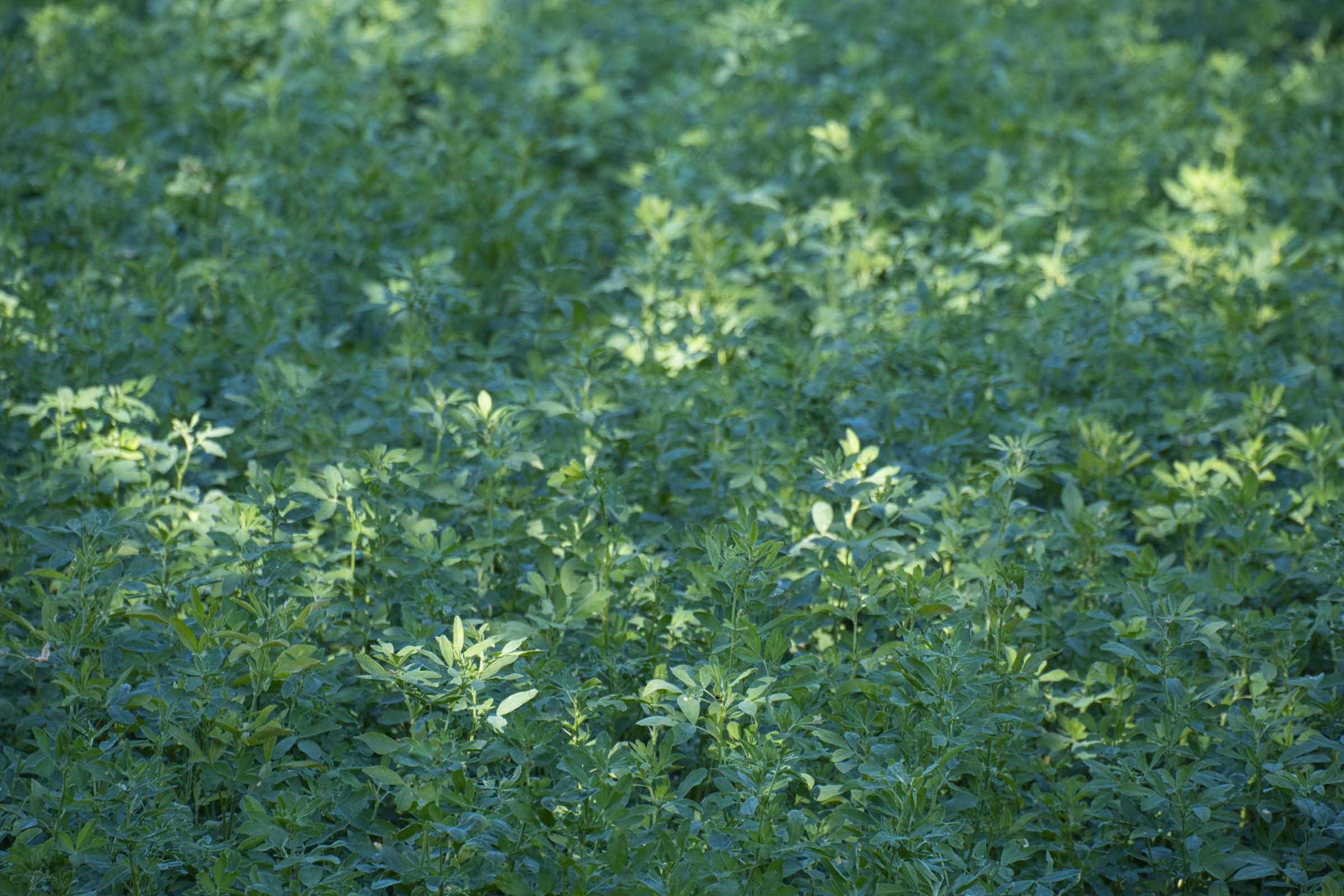
New seedings:  Damage to new seedings has been minimal due to their excellent frost tolerance.  To determine if damage has occurred examine plants – they will first appear to wilt and then die over the next 3 to 5 days.  If plants die back to the ground, the plant is dead.  At least one set of leaves must have escaped damage for recovery to be expected. Determine the number of living plants per square foot.  If more than 20 plants per square foot remain, stand will survive in good shape.  As stands are thinner than 15 plants per square foot consider top seeding alfalfa.

Established stands: Evaluate the stands to determine 1) if less than 30 % stem tops are damaged, 2) if most or all stem tops are damaged, and 3) if the stems are frozen back to the ground.  Damaged means wilting (usually visible in about 24 hours after frost) or yellow to brown discoloration (usually visible 3 to 5 days after the frost).

  1. If less than 30% of stem tops show wilting/browning from frost, do nothing.  Enough stems remain to provide good growth and yield of first cutting.  Stand will have some yield reduction of first cutting but will recover completely on second cutting.
  2. If most or all stem tops are damaged and stand is less than 10 inches tall, do nothing.  The growing points have been killed but the alfalfa will form new buds at lower leaf junctures (axillary buds) and continue growing (first cutting might be delayed).  Alfalfa may demonstrate some horizontal growth.  Mowing existing top growth will not enhance recovery.  If stand is over 12 inches tall, harvest and allow to regrow.  None of the alfalfa that was frozen in the Midwest was over 12 inches when frosted to our knowledge.  Note that frozen material may be high in nitrate.
  3. If all stems on a plant are frozen back to the ground, the plant in dead.  This extent of frost damage has not occurred in the Midwest to our knowledge.  However, if observed and fewer than 5 plants per square foot remain, consider rotating to another crop and replanting alfalfa in another field to avoid autotoxicity.
Print This Page

You May Also Like

  • ▶ Watch: Focus on Forage Research▶ Watch: Focus on Forage Research
  • ▶ Watch: Focus on Forage Management▶ Watch: Focus on Forage Management
  • ▶ Forage Insect Pest Update▶ Forage Insect Pest Update
  • ▶ Determining the Value of Standing Forage▶ Determining the Value of Standing Forage

Division of Extension

Connecting people with the University of Wisconsin

  • Agriculture
  • Community Development
  • Health & Well-Being
  • Families & Finances
  • Natural Resources
  • Positive Youth Development
University of Wisconsin-Madison      |        Explore Extension: Agriculture Community Development Families & Finances Health Natural Resources Youth
Connect With Us
Support Extension
Extension Home

We teach, learn, lead and serve, connecting people with the University of Wisconsin, and engaging with them in transforming lives and communities.

Explore Extension »

County Offices

Connect with your County Extension Office »

Map of Wisconsin counties
Staff Directory

Find an Extension employee in our staff directory »

staff directory
Social Media

Get the latest news and updates on Extension's work around the state

facebook iconFacebook

twitter icon Follow on X


Facebook
Follow on X

Feedback, questions or accessibility issues: info@extension.wisc.edu | © 2026 The Board of Regents of the University of Wisconsin System
Privacy Policy | Non-Discrimination Statement & How to File a Complaint | Disability Accommodation Requests

The University of Wisconsin–Madison Division of Extension provides equal opportunities in employment and programming in compliance with state and federal law.