Skip to content
UW Crest

Crops and Soils

Division of Extension

  • Topics
    • Economics, Budgets and Financials
    • Emerging Crops
    • Forage Production and Management
    • Fruit and Vegetable Production
    • Grain Production and Management
    • Grazing
    • On-Farm Research
      • Nitrogen Optimization Pilot Program
    • Pest Management
    • Soils, Nutrient Management, and Soil Health
  • Events
    • Events Calendar
    • UW Forage and Cover Crop Field Day
    • Agronomy and Soils Field Day
    • Wisconsin Extension Weed Management Workshop
    • WWASH Conference
    • Badger Crops and Soils Update Meetings
  • News
    • News
    • Get Connected
      • The Wisconsin Crop Manager
    • Hay Market Report
    • Ag Weather Outlook for Wisconsin
  • Programs
    • Webinars
      • Badger Crop Connect
      • Emerging Crops Webinars
      • Focus on Forage
      • Foundational Crop Scouting Training
      • Vegetable Production Webinars
    • Podcasts
  • Articles
  • People
  • About
  • Contact Us
Search
University of Wisconsin-Extension

Field Peas

Written by Cover Crops Resources
Share
  • Share:
  • Share on Facebook
  • Share on X (Twitter)
  • Share via Email
  • Copy Link

Copied!

General Comments

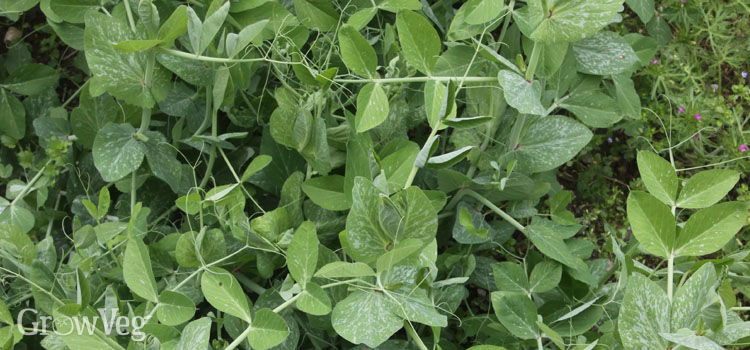
Large-seeded, cool season annual.  Best companion-seeded with a spring cereal grain to encourage climbing and minimize lodging.

Pea-small grain mixtures can also be harvested as forage, yielding 1-3 TDM per-acre, with slightly higher forage quality and palatability than small grain forage alone.

Nitrogen credits to a following crop are minimal.  Credit 20 lbs N per-acre if the peas reached near-maturity.

Planting specifications

Seeding rate: Peas are recommended for planting in mixes:

  • 30-40 lbs Trapper field peas* with 20-30 lbs oats or barley for cover only;
  • 50 lbs Trapper field peas* with 30-45 lbs oats or barley for forage production.

*Seed size varies considerably among varieties (Trapper is larger than many – fewer seeds per pound).

Seeding depth: Seed the peas, or the mix, ½ inch deep.

Fertility needs: Peas will fix most, but not all, of the N required for optimum growth.  Apply 15 to 30 lbs supplemental N to optimize biomass production (2 to 3.5 TDM per-acre).

Inoculate with Rhizobium leguminosarum biovar viciae (R. viciae).

Management and termination

None needed, will winter kill

In a cover crop mix

Field peas are only recommended in mixes, seed seeding rates above.
Print This Page

You May Also Like

  • The Cutting Edge Podcast Episode #53: Hemp Research Priorities at UW-Madison with Dr. Shelby EllisonThe Cutting Edge Podcast Episode #53: Hemp Research Priorities at UW-Madison with Dr. Shelby Ellison
  • Soil Health in Cranberry Production Systems: A Case Study of Four Wisconsin FarmsSoil Health in Cranberry Production Systems: A Case Study of Four Wisconsin Farms
  • 2024 Wisconsin Corn Hybrid Performance Trials2024 Wisconsin Corn Hybrid Performance Trials
  • ▶ What You Can and Can’t Learn from a Nitrogen Response Curve▶ What You Can and Can’t Learn from a Nitrogen Response Curve

Division of Extension

Connecting people with the University of Wisconsin

  • Agriculture
  • Community Development
  • Health & Well-Being
  • Families & Finances
  • Natural Resources
  • Positive Youth Development
University of Wisconsin-Madison      |        Explore Extension: Agriculture Community Development Families & Finances Health Natural Resources Youth
Connect With Us
Support Extension
Extension Home

We teach, learn, lead and serve, connecting people with the University of Wisconsin, and engaging with them in transforming lives and communities.

Explore Extension »

County Offices

Connect with your County Extension Office »

Map of Wisconsin counties
Staff Directory

Find an Extension employee in our staff directory »

staff directory
Social Media

Get the latest news and updates on Extension's work around the state

facebook iconFacebook

twitter icon Follow on X


Facebook
Follow on X

Feedback, questions or accessibility issues: info@extension.wisc.edu | © 2026 The Board of Regents of the University of Wisconsin System
Privacy Policy | Non-Discrimination Statement & How to File a Complaint | Disability Accommodation Requests

The University of Wisconsin–Madison Division of Extension provides equal opportunities in employment and programming in compliance with state and federal law.