Spring arrives in the upper Midwest with varied conditions depending on where you are in the region. Under these circumstances, the checklist below has several strategies that can ease the transition into spring, and help you avoid common mistakes associated with going too fast from dry, austere hay feeding to lush green grass grazing.
Provide dry hay for the first couple of weeks of spring green-up
A smooth transition calls for the continuation of hay feeding for a week or two into grass green-up. This strategy allows to gradually change from the stored hay to pasture grazing. The rumen microbe population changes with the type of feeding. During the winter, this population is mainly high-fiber digesting microbes because of the hay diet that livestock are consuming. In the spring, new growth of grasses has very low ‘effective’ fiber, to which the microbes need to adjust. Also, this greenup is very high in crude protein. This combination of low ‘effective fiber’ and high protein is associated with spring diarrhea. Extending dry hay feeding helps ease the transition by balancing the rumen microbes until fully adjusted.

Take animals off pasture
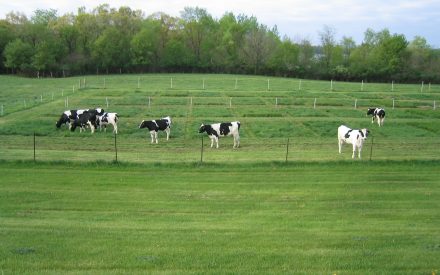
Delay initial grazing, or limiting the number of hours the animals have access to pasture each day, allows for sufficient regrowth after winter dormancy. Utilize a stocking rate (animals/acre) that is not too high. Bunch grasses, like orchardgrass, with tall growth habit will not tolerate a high stocking rate that would lead to close grazing of the plant stems where a significant part of carbohydrate reserves are stored; keeping animals on pasture while grass regrows will encourage grazing on the new growth because it will be tender and more palatable. Sod type grasses like Kentucky bluegrass, smooth bromegrass, or reed canarygrass will come back early, however, they will also benefit from grazing time off. Grasses that rely on the underground stems or rhizomes like the sod grasses will use these structure as energy reservoir to grow the new leaves. Taking animals off pasture, also allows for a strong root system. This plan will likely provide you with more grass later in the spring.
Consider early harvesting of excess forage growth before grasses are fully flowered or head out. If you opt to harvest the excess forage, the best time to do it is immediately after grazing. This approach will help maintain the forage nutritive value of the grass, and provides early harvesting of surplus grass.

Split nitrogen (N) and potassium (K) fertilizer applications
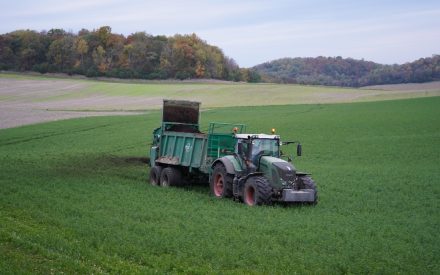
There are several reasons for splitting N and K. Spring lush pastures that have excess nitrogen and potassium tend to cause grass tetany or low blood magnesium in the animal. Results from soil testing will show what are the deficiencies that need to be addressed. Most nitrogen and potassium fertilizers are top-dressed in split applications. The purpose for dividing the nitrogen applications is to avoid excess levels in the soil that could lead to grass tetany. Split applications also will help control leaching and volatilization losses, they also minimize the effects of uneven fertilizer distribution, the risk of fertilizer burns, and guarantee that nitrogen and potassium supply coincides with livestock forage needs.
Fast rotation of pastures
Do a quick rotation of the livestock through your paddocks to capture the initial grass growth but mainly because your pasture might be too wet. Doing the quick rotation will help avoid compaction by minimizing the hooves action on the above normal soil moisture during this time of year.
Treat for internal parasites
Internal parasites go hand in hand with grazing livestock. Prevention and management of parasites during spring is key so they don’t become a health problem for grazing livestock. High humidity allows for parasites to remain infectious in pastures for longer time. Check with your veterinarian about the best preventive options.