Skip to content
UW Crest

Crops and Soils

Division of Extension

  • Topics
    • Economics, Budgets and Financials
    • Emerging Crops
    • Forage Production and Management
    • Fruit and Vegetable Production
    • Grain Production and Management
    • Grazing
    • On-Farm Research
      • Nitrogen Optimization Pilot Program
    • Pest Management
    • Soils, Nutrient Management, and Soil Health
  • Events
    • Events Calendar
    • UW Forage and Cover Crop Field Day
    • Agronomy and Soils Field Day
    • Wisconsin Extension Weed Management Workshop
    • WWASH Conference
    • Badger Crops and Soils Update Meetings
  • News
    • News
    • Get Connected
      • The Wisconsin Crop Manager
    • Hay Market Report
    • Ag Weather Outlook for Wisconsin
  • Programs
    • Webinars
      • Badger Crop Connect
      • Emerging Crops Webinars
      • Focus on Forage
      • Foundational Crop Scouting Training
      • Vegetable Production Webinars
    • Podcasts
  • Articles
  • People
  • About
  • Contact Us
Search
University of Wisconsin-Extension
Articles > Alfalfa

Cut, bale, SCOUT!

Written by Mark Renz
Share
  • Share:
  • Share on Facebook
  • Share on X (Twitter)
  • Share via Email
  • Copy Link

Copied!

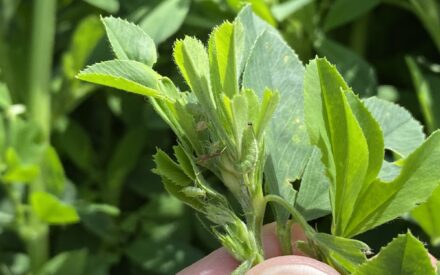
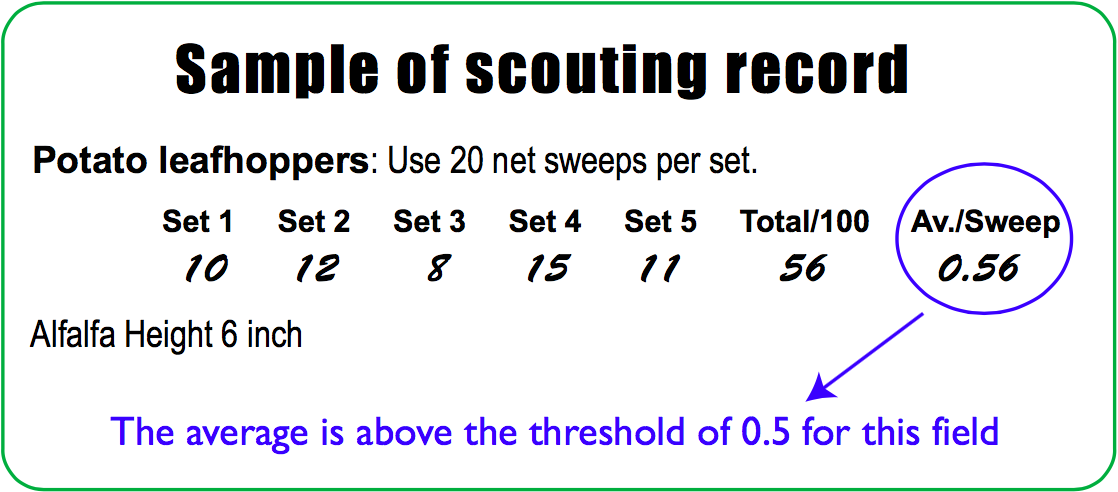
Scouting for Leafhoppers
Screen Shot 2016-07-15 at 5.56.24 AM
Screen Shot 2016-07-15 at 5.53.19 AM

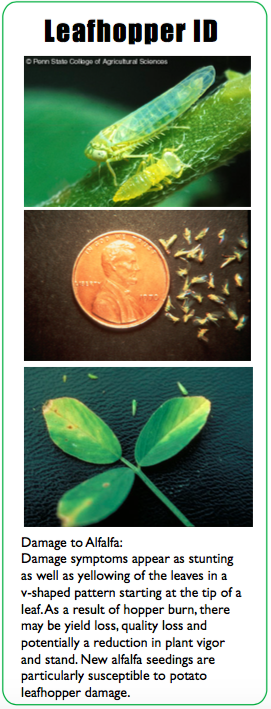
Weekly Scouting – 20 sweeps at 5 locations in each alfalfa field. Because leafhopper population densities vary from year to year and from field to field, the only way to accurately determine damage potential is by monitoring fields on a weekly schedule.

  • Start scouting 5-7 days after first cut.
  • Use a standard 15-inch diameter insect sweep net.
  • Walk a W-shaped pattern in the field and take twenty consecutive sweeps in each of five randomly selected areas.
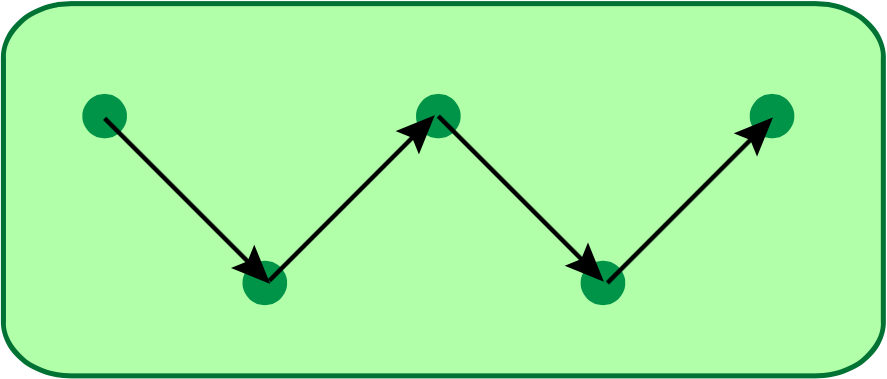
  • Keep a running totally of the number of leafhoppers caught. Count adults and nymphs.
  • Divide the field total by 100.
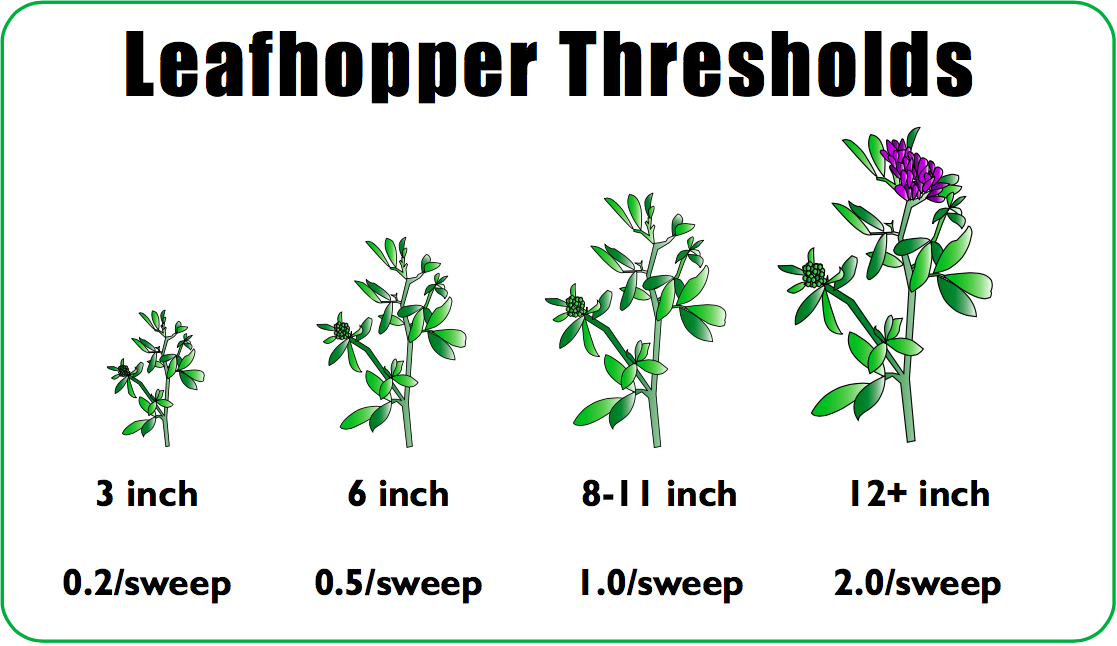
  • Compare the field counts with the threshold based on crop height.
  • If over the threshold, decide on spraying or cutting.
  • Continue to the next field.
  • After cutting a field over threshold, scout the regrowth. Start scouting sooner if nymphs were present.
Screen Shot 2016-07-15 at 5.54.47 AM
Screen Shot 2016-07-15 at 5.54.14 AM
cut-bale-scout2007Download
Print This Page

You May Also Like

  • ▶ Watch: Focus on Forage Research▶ Watch: Focus on Forage Research
  • ▶ Watch: Focus on Forage Management▶ Watch: Focus on Forage Management
  • ▶ Forage Insect Pest Update▶ Forage Insect Pest Update
  • ▶ Determining the Value of Standing Forage▶ Determining the Value of Standing Forage

Division of Extension

Connecting people with the University of Wisconsin

  • Agriculture
  • Community Development
  • Health & Well-Being
  • Families & Finances
  • Natural Resources
  • Positive Youth Development
University of Wisconsin-Madison      |        Explore Extension: Agriculture Community Development Families & Finances Health Natural Resources Youth
Connect With Us
Support Extension
Extension Home

We teach, learn, lead and serve, connecting people with the University of Wisconsin, and engaging with them in transforming lives and communities.

Explore Extension »

County Offices

Connect with your County Extension Office »

Map of Wisconsin counties
Staff Directory

Find an Extension employee in our staff directory »

staff directory
Social Media

Get the latest news and updates on Extension's work around the state

facebook iconFacebook

twitter icon Follow on X


Facebook
Follow on X

Feedback, questions or accessibility issues: info@extension.wisc.edu | © 2026 The Board of Regents of the University of Wisconsin System
Privacy Policy | Non-Discrimination Statement & How to File a Complaint | Disability Accommodation Requests

The University of Wisconsin–Madison Division of Extension provides equal opportunities in employment and programming in compliance with state and federal law.