Skip to content
UW Crest

Crops and Soils

Division of Extension

  • Topics
    • Economics, Budgets and Financials
    • Emerging Crops
    • Forage Production and Management
    • Fruit and Vegetable Production
    • Grain Production and Management
    • Grazing
    • On-Farm Research
      • Nitrogen Optimization Pilot Program
    • Pest Management
    • Soils, Nutrient Management, and Soil Health
  • Events
    • Events Calendar
    • UW Forage and Cover Crop Field Day
    • Agronomy and Soils Field Day
    • Wisconsin Extension Weed Management Workshop
    • WWASH Conference
    • Badger Crops and Soils Update Meetings
  • News
    • News
    • Get Connected
      • The Wisconsin Crop Manager
    • Hay Market Report
    • Ag Weather Outlook for Wisconsin
  • Programs
    • Webinars
      • Badger Crop Connect
      • Emerging Crops Webinars
      • Focus on Forage
      • Foundational Crop Scouting Training
      • Vegetable Production Webinars
    • Podcasts
  • Articles
  • People
  • About
  • Contact Us
Search
University of Wisconsin-Extension

Corn silage

Planting Corn For Silage Following Winter-Killed Alfalfa

Planting Corn For Silage Following Winter-Killed Alfalfa

What happens to corn silage yield and quality with later planting dates? The following is a summary of planting date trials conducted at Arlington, WI. The objective of these trials is to measure the impact of planting date on corn forage yield and quality.

On-farm moisture testing of corn silage

On-farm moisture testing of corn silage

Accurately determining corn whole plant moisture is important when harvesting for corn silage. Harvesting corn for silage too early (high moisture content) or too late (low moisture content) can affect forage yield, quality and silage fermentation.

Calculating grain yield utilizing a corn silage forage test

Calculating grain yield utilizing a corn silage forage test

Routine laboratory forage analysis of corn silage typically includes percent starch determination for the feed. Nutritionists utilize this information to partition Non-Fiber Carbohydrate (NFC) portions into % starch, % sugar and other NFC components to optimize production and animal health.

The relationship between corn grain yield and forage yield: Effect of moisture, hybrid and environment

The relationship between corn grain yield and forage yield: Effect of moisture, hybrid and environment

Understanding the relationship between corn grain and forage yield is important to dairymen and grain farmers who often contract with each other for corn silage production.

Planting Corn in June and July! – What can you expect?

Planting Corn in June and July! – What can you expect?

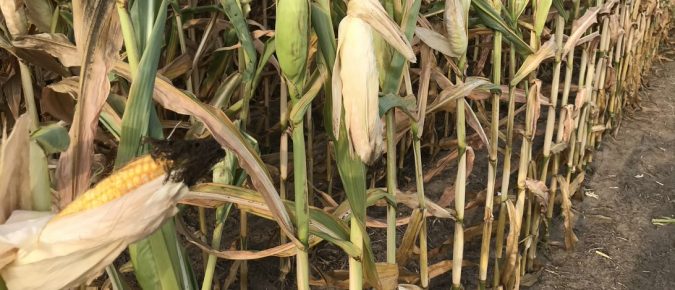
Unprecedented rainfall continues to cause flooding and ponding leading to problems for corn establishment on 5 to 10% of planted acres in southern Wisconsin. Flooded and ponded areas have existed long enough now so that plants have been killed and areas need to be replanted.

Drought Stress Reduces Corn Silage Yield More Than Quality

Drought Stress Reduces Corn Silage Yield More Than Quality

Farmers trying to decide about using drought affected corn fields must first determine success of pollination. If pollination will affect grain yield, then growers must follow directions given by hail adjusters to ensure insurance payment. If the decision is made to harvest the field for silage, then it must be cut at the proper moisture; the crop is usually wetter than it appears.

Microbial inoculants for silage

Microbial inoculants for silage

Ensiling is an important means to preserve forage quality. Although silage fermentation occurs naturally under anaerobic conditions due to the native bacteria on plants, the speed and efficiency of the fermentation (pH drop) is variable, depending on the numbers and types of lactic acid bacteria on the crop.

Impact of Defoliation on Corn Forage Quality

Impact of Defoliation on Corn Forage Quality

An improved understanding of the effects of defoliation on forage yield and quality would improve the ability of agronomists, farmers, and crop insurance adjusters to assess the economic impact of hail damage to corn harvested for forage.


Posts navigation

Posts pagination

◄ Page 1 Page 2 Page 3 Page 4

Division of Extension

Connecting people with the University of Wisconsin

  • Agriculture
  • Community Development
  • Health & Well-Being
  • Families & Finances
  • Natural Resources
  • Positive Youth Development
University of Wisconsin-Madison      |        Explore Extension: Agriculture Community Development Families & Finances Health Natural Resources Youth
Connect With Us
Support Extension
Extension Home

We teach, learn, lead and serve, connecting people with the University of Wisconsin, and engaging with them in transforming lives and communities.

Explore Extension »

County Offices

Connect with your County Extension Office »

Map of Wisconsin counties
Staff Directory

Find an Extension employee in our staff directory »

staff directory
Social Media

Get the latest news and updates on Extension's work around the state

facebook iconFacebook

twitter icon Follow on X


Facebook
Follow on X

Feedback, questions or accessibility issues: info@extension.wisc.edu | © 2026 The Board of Regents of the University of Wisconsin System
Privacy Policy | Non-Discrimination Statement & How to File a Complaint | Disability Accommodation Requests

The University of Wisconsin–Madison Division of Extension provides equal opportunities in employment and programming in compliance with state and federal law.