

Living Aisles in Diverse Vegetable Systems
Most farmers are familiar with the benefits of cover crops: they reduce erosion, improve soil health, and help suppress weeds. Cover crops are often incorporated into fields as part of crop rotations, but they can also be planted in the aisles between cash crop beds, providing cover during a time of year when the soil is typically bare. These “living aisles” add additional advantages, such as reducing mud during rainy periods, allowing farmers to access beds when the ground is wet, and keeping harvest bins cleaner. Depending on the species used, living aisles may also be allowed to grow into beds after harvest to provide winter cover.
At the same time, living aisles introduce new management challenges. Increased competition with cash crops may require more precise planting schedules, increased mowing frequency, and adjustments to fertility and irrigation management. Still, for certain production systems, many farmers report that the benefits outweigh the costs and that the added effort is well worth it.
The Climate Resilient Organic Vegetable Production (CROVP) community of practice, funded by a recent Sustainable Agriculture Research and Education (SARE) grant, brings together farmers to explore methods to reduce tillage and increase system resilience. Farmers in the CROVP group meet regularly via Zoom to share experiences, troubleshoot challenges, and exchange tips for implementing new practices. Several are experimenting with living aisles – testing different rotations, cover crop mixes, and strategies to manage interactions between aisles and beds. In this article, we highlight four case studies from farms of varying sizes and production goals to showcase the opportunities and challenges of adopting living aisle systems.
Read these living aisle case studies:
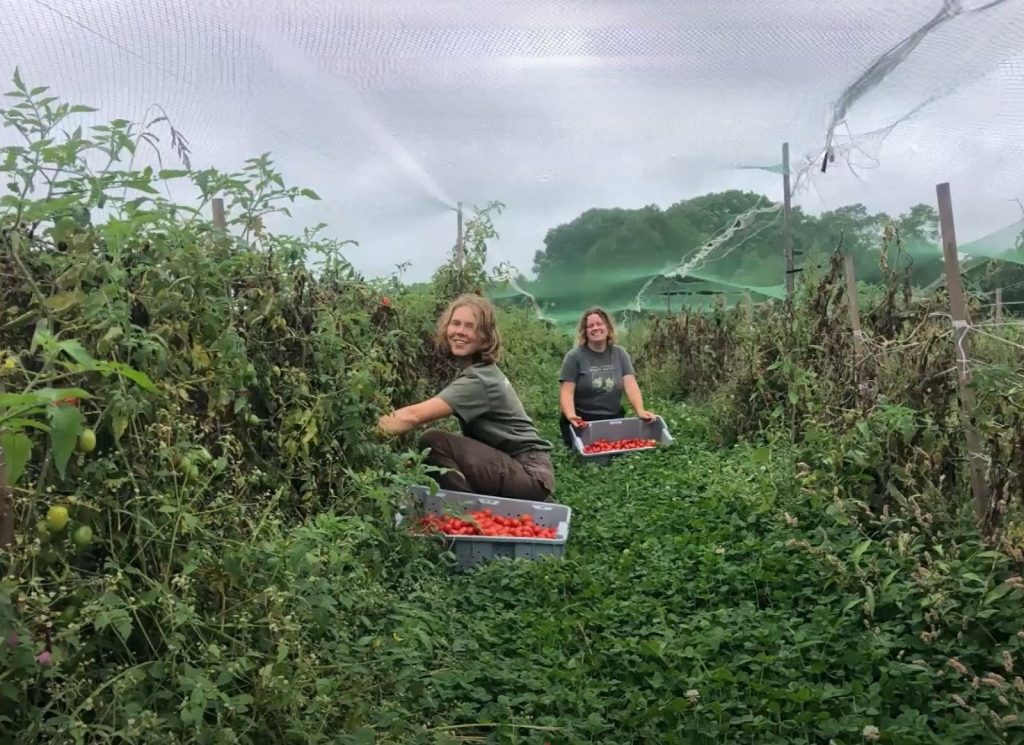
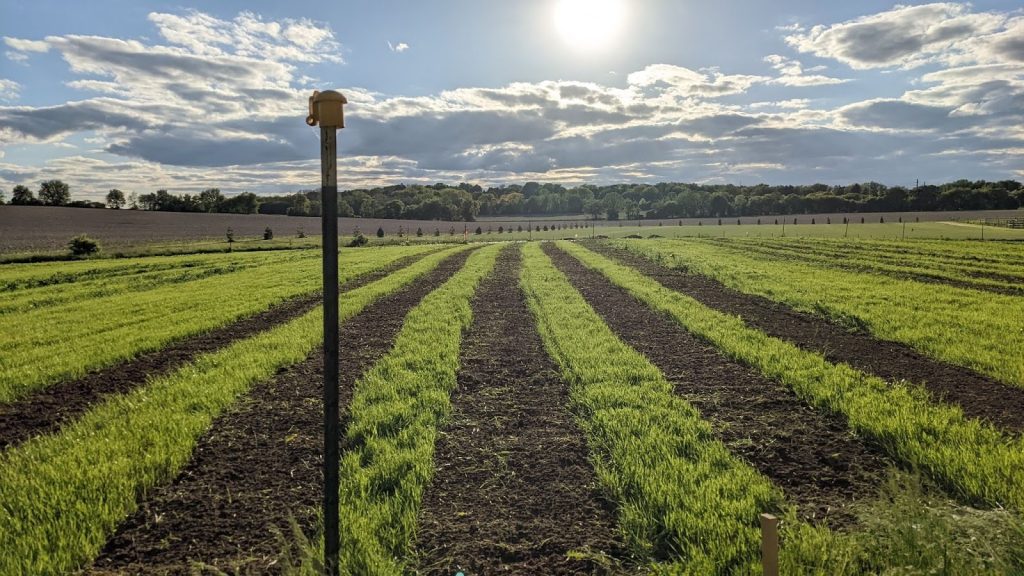
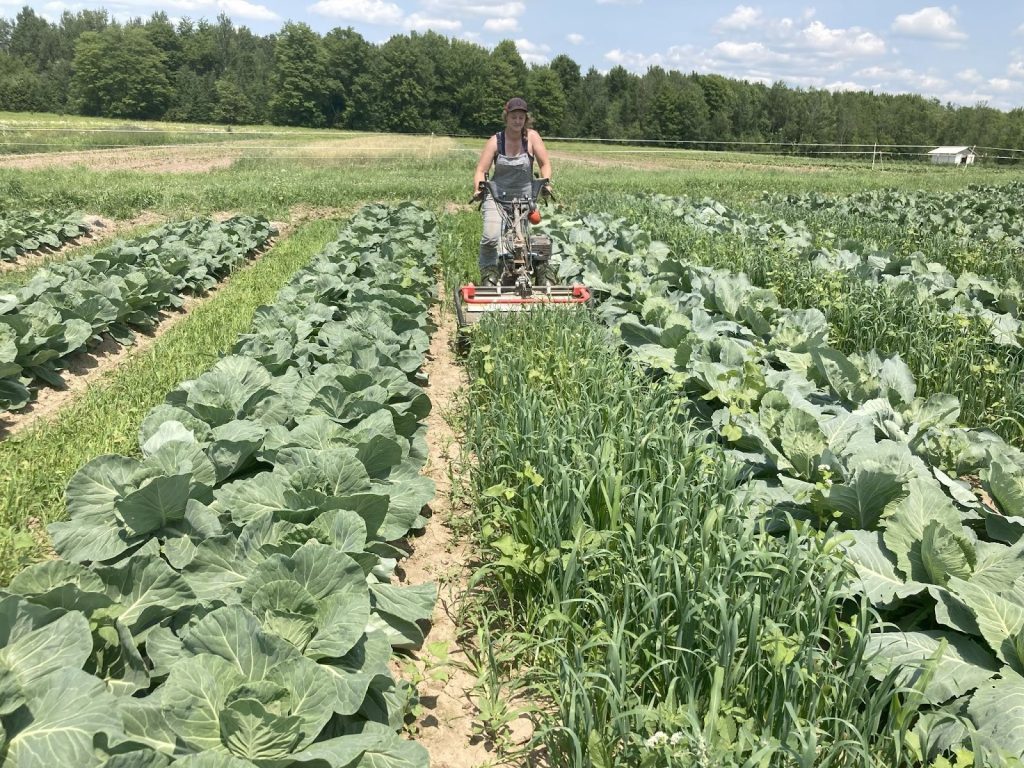
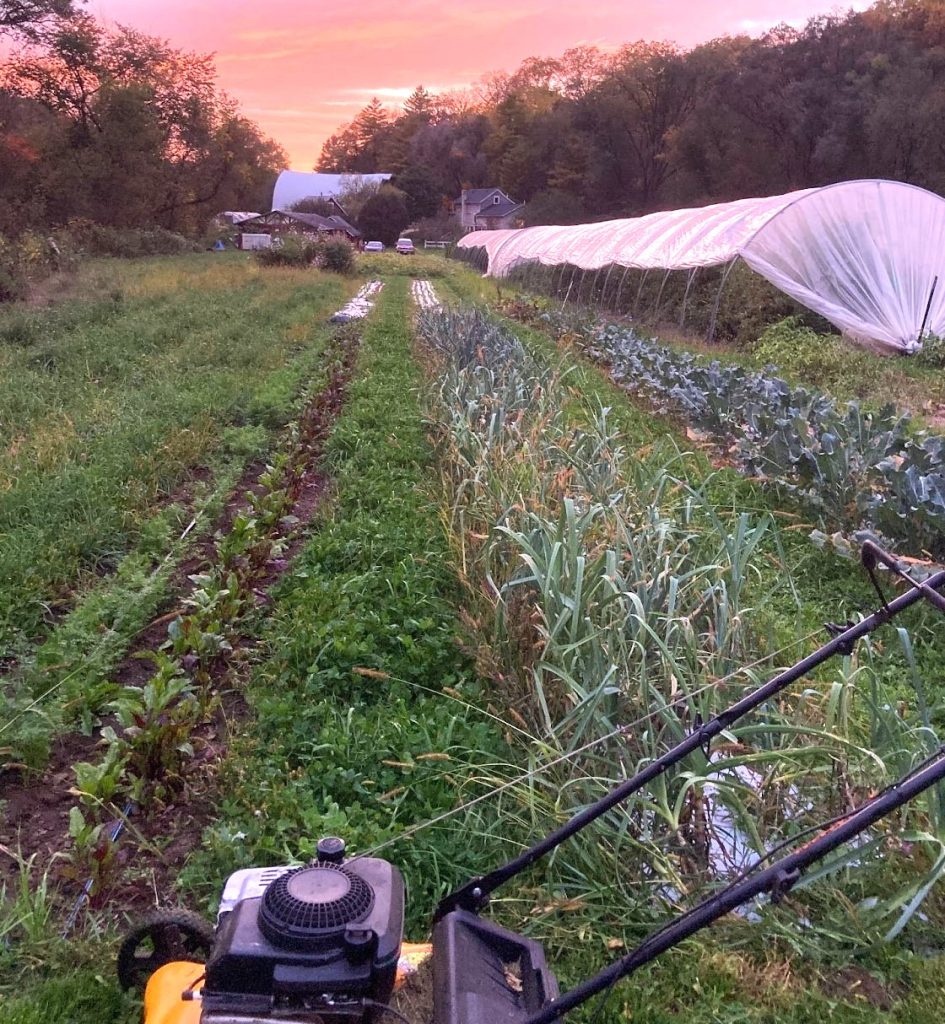
Living aisle systems represent an exciting frontier of research and on-farm experimentation. While they offer numerous benefits, their design and management introduce a layer of complexity that can feel daunting.
For many growers, incorporating living aisles is an iterative journey, starting with simple systems and gradually evolving toward greater species diversity, perenniality, and soil coverage. This shift requires a fundamental change in management philosophy, one that balances the evolving needs of both cash crops and cover crops.
The farmers highlighted here are pioneering complex systems to maximize on-farm benefits. They are constantly asking questions, experimenting, and taking risks, all while engaging with a broader community to share insights and lessons learned. Their motivations go beyond practicality; they are driven by a commitment to land stewardship, biodiversity, human health, reduced reliance on off-farm inputs, and creating better working environments for their crew.
These growers are the first to acknowledge that there is still much to learn and many questions yet to be asked. Each system needs to be tailored to the farmer’s goals and the unique characteristics of their land. That’s why farmer networks like CROVP and Momentum Ag are so valuable. What may seem too risky or unachievable alone becomes far more possible when farmers collaborate and help lift each other up. As Lincoln Fishman reminded us, developing new systems always feels too hard at first: “You just have to keep your eyes on the prize.”